
This guide is educational and does not replace advice from your veterinarian.
Those pale eyes and that “I’m basically a wolf” face sell a lot of husky puppies every year. Then reality arrives: the holes in the garden, the fur on everything you own, the 6 a.m. concert, and the neighbour returning your dog for the third time. Rescues see many huskies surrendered by well-meaning families who did not know what they were signing up for. This guide is the honest version, so you can decide with your eyes open.
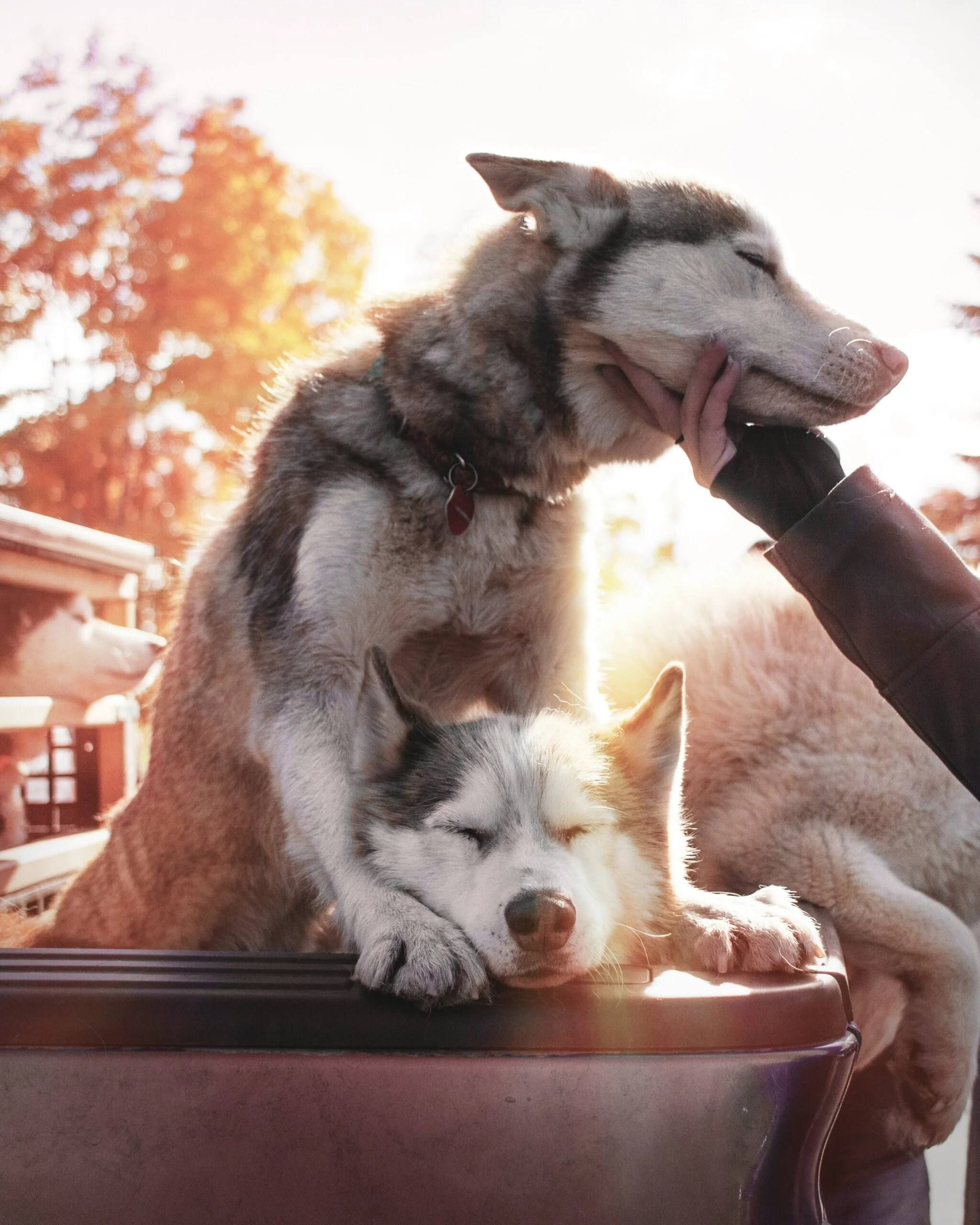
Siberian Husky at a glance
| Trait | What to expect |
|---|---|
| Size | Males about 21 to 23.5 in and 45 to 60 lb; females about 20 to 22 in and 35 to 50 lb |
| Lifespan | Roughly 12 to 14 years |
| Coat | Dense double coat; light weekly brushing, daily during the twice-yearly “coat blow” |
| Exercise | 1 to 2 hours of vigorous activity daily, plus mental work |
| Temperament | Friendly, outgoing, mischievous, independent; a poor guard dog |
| Training | Smart but unimpressed by repetition; positive reinforcement and patience |
| Climate | Built for cold. Needs real care in heat |
Personality: friendly, funny and very much their own boss
Huskies tend to love everyone, including burglars, so do not count on one as a watchdog. They are sociable and playful, often happiest with a canine buddy, and they talk constantly: howls, “woo-woos” and what sounds like arguments. That independence comes from generations of making their own decisions while pulling sleds across ice. Training works, but the dog must see a reason to cooperate. Fun, food and short sessions win. Repetition and harsh handling do not.
The five things that catch new owners out
- Exercise is not optional. A husky that gets a 20-minute walk will redirect that energy into your sofa, your garden and your sanity. Running, hiking, bikejoring, canicross, or long fetch-free adventures all count. Our dog exercise guide shows how to split activity by age.
- Fences are suggestions. Huskies climb, dig and sometimes open latches. Plan on a tall, secure fence, check it for gaps often, and microchip your dog and keep ID tags on at all times.
- Off-leash is a risk. Strong prey drive plus a wandering streak plus patchy recall means traffic danger and lost dogs. Use a long line or a fully fenced area.
- The shedding is dramatic. Expect fur tumbleweeds, especially during the seasonal blow when the undercoat comes out in clumps. Do not shave a double coat to “help” in summer; the coat insulates against heat as well as cold and can grow back unevenly. Our shedding guide has a weekly routine.
- Heat is a real hazard. They are bred for the cold. In warm climates, exercise early or late, keep them in air conditioning, and read how to keep a dog cool and spot heatstroke.
A realistic day with a husky
| Time | Activity | Why it matters |
|---|---|---|
| Morning | 45 to 60 minute run, hike or brisk walk | Burns the first wave of energy before work |
| Breakfast | Food in a puzzle feeder or scatter feed | Mental work makes meals last |
| Midday | Short training session or sniff walk | Keeps the brain busy and builds focus |
| Evening | Second long walk or play with a friend | Prevents the night-time “zoomies” |
| Weekly | One bigger adventure plus a brush-out | Variety stops boredom and keeps the coat healthy |
Husky vs Alaskan Malamute
| Siberian Husky | Alaskan Malamute | |
|---|---|---|
| Size | Medium, athletic | Larger and heavier |
| Built for | Speed and endurance | Hauling heavy loads |
| Energy | Very high | High, a bit more laid back |
| Space | Needs exercise more than room | Needs more room and strength to handle |
Health: what to ask a breeder about
The breed is generally hardy, but you should know the usual suspects: hip dysplasia, inherited eye conditions such as cataracts and progressive retinal atrophy, hypothyroidism and a skin condition called zinc-responsive dermatosis. Breed clubs recommend hip and eye screening of the parents, so ask for the results on paper before you pay a deposit. Keep up with vaccines (schedule explained), parasite control and dental care.
Blue eyes, brown eyes, or one of each are all normal for the breed and do not mean a health problem on their own.
Is a husky right for you?
| You will probably thrive if… | Think twice if… |
|---|---|
| You run, hike or cycle regularly in cool weather | You want a dog that can be left alone all day (read about separation anxiety) |
| You have a tall, secure yard or can supervise every outing | You live in a hot climate with no air conditioning |
| You enjoy a funny, vocal, mischievous dog | You want perfect off-leash obedience |
| You can handle heavy seasonal shedding | You are very house-proud or allergic to dog hair |
🧠 Quick Quiz: Could You Handle a Husky?
Tap a question to reveal the answer.
Q1. Should you shave a husky in summer to keep it cool?
Answer: No. The double coat insulates against heat as well as cold. Brush out the undercoat and provide shade and air conditioning instead.
Q2. Is a husky a good choice for off-leash walks?
Answer: Usually not. Strong prey drive and a wandering streak make recall unreliable. Use a fenced area or a long line.
Q3. How much exercise does an adult husky need daily?
Answer: Roughly one to two hours of vigorous activity, plus mental stimulation.
- Plan for 1 to 2 hours of real exercise every day.
- Fence securely, microchip, and keep the dog on lead or a long line outside fences.
- Brush often, never shave the double coat, and protect from heat.
- Choose breeders who health-test hips and eyes.
Siberian Husky FAQ
Are huskies good for first-time owners?
They can work if you are active, patient and well prepared, but they are rarely the easiest first dog. Their independence, escape skills and exercise needs catch beginners off guard.
Do huskies bark a lot?
They bark less than many breeds but howl, talk and yodel often. Boredom makes it worse. Exercise and enrichment help more than scolding.
Can a husky live in an apartment?
Possible, but only if you reliably provide long daily exercise and your building tolerates howling. It is a challenging fit for most apartment dwellers.
Do huskies get along with cats and small pets?
Many have a strong prey drive, so small animals are at risk. Some huskies raised with cats do fine, but never assume it and always supervise.
How much do huskies shed?
A lot. Shedding is steady year-round and heavy for a few weeks, twice a year. Weekly brushing, daily in the blow, keeps it manageable.
Why do huskies escape so much?
They were bred to travel long distances and think independently. A bored, under-exercised husky will dig, climb or squeeze through any gap. Secure fencing and enough exercise reduce the urge.
- Undercoat rakes for heavy shedders
- Long training lines for safe recall practice
- Puzzle feeders to give the brain a job
As an Amazon Associate we earn from qualifying purchases. We list product types, not tested picks.